For the curious baker
Why Start With the Bean? Making Your Own Vanilla Extract and Paste
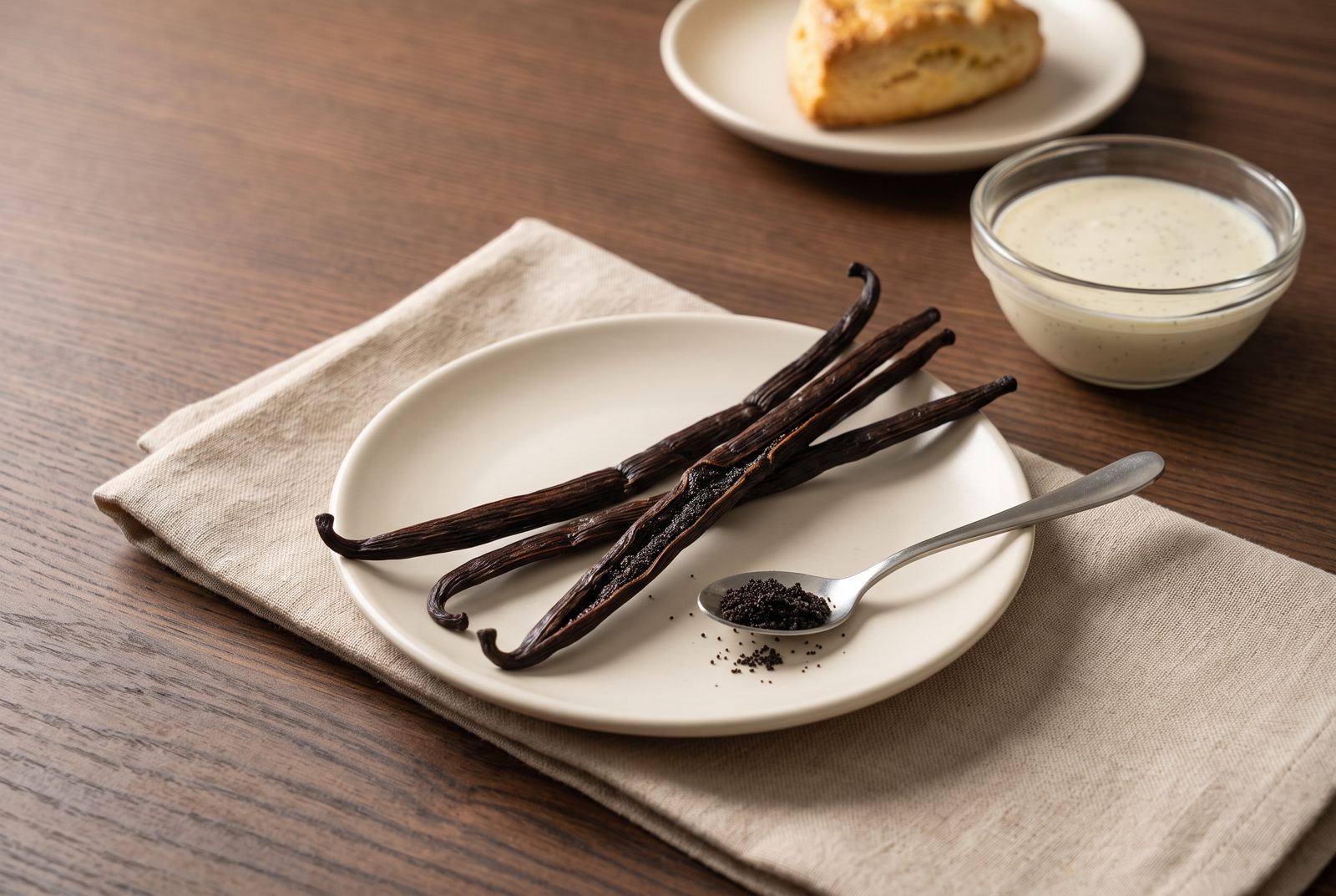
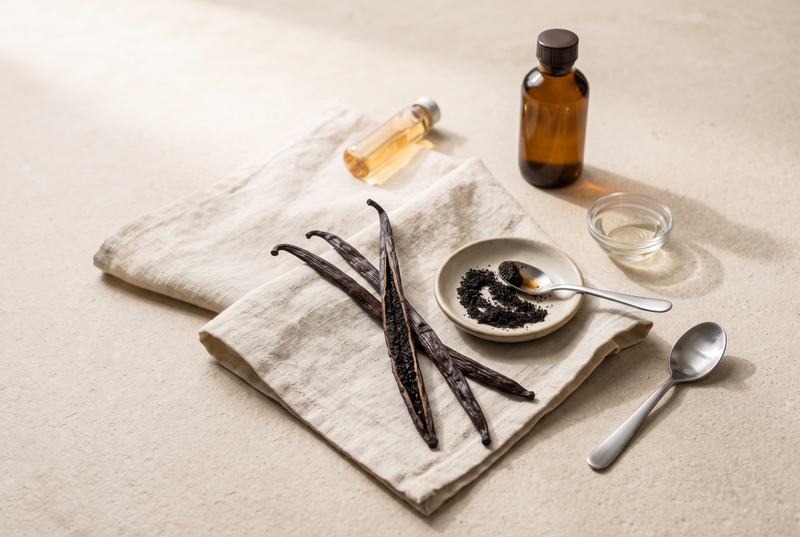
Ready-made vanilla paste is a genuinely useful product. It is quick, easy to measure, and gives you those lovely specks. So why would anyone buy whole pods instead? The honest answer is not that beans are always better. It is that a bean gives you choices a jar cannot: how strong, how sweet, with or without alcohol, and from which origin. One pod can become the heart of a custard, a jar of vanilla sugar, and part of a bottle of extract you made yourself.
What you get when you start with the bean
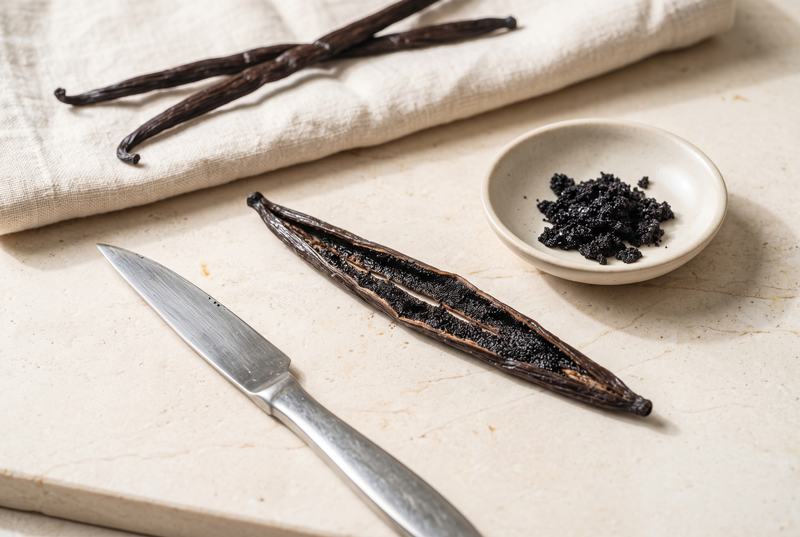
Freshness at the moment you need it. The aroma of a pod is held inside until you open it, which is why cooks are advised to scrape the seeds only when they are ready to use them.
One pod, several uses. The seeds go into your recipe. The pod can be steeped in warm cream, then dried and buried in sugar. Pods that have already given their best can still be blended into a homemade paste.
You decide what goes in. Commercial pastes are typically made from extract, ground beans, sugar or syrup, and a thickener. When you make your own, you choose the sweetener, whether to use alcohol, and how concentrated it should be.
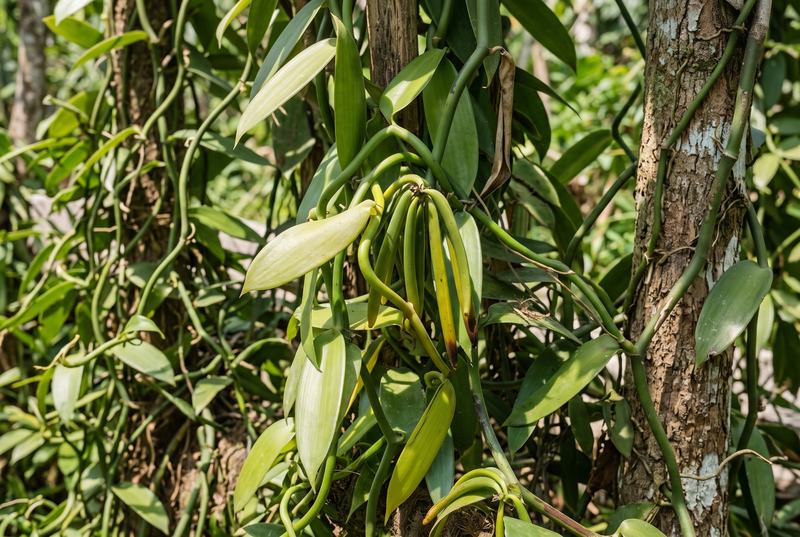
You know the origin. Starting with whole pods means you know exactly which beans, from which region, are in your kitchen.
There are trade-offs. Beans ask for a few minutes of work, and America's Test Kitchen found that store-bought paste can cost less per use than buying individual pods. Making your own extract also takes weeks of patience. The bean is the choice for cooks who want control and character, not the shortest route.
Where the bean shines: three favourites
Creamy pastry. Pastry cream, crème anglaise, panna cotta and ice-cream bases are where a whole bean earns its place most clearly. The vanilla is infused gently into warm milk or cream and never faces a hot oven. In America's Test Kitchen's panna cotta test, the whole bean came first, paste was a close second, and extract came third.
Cheesecake. A classic baked cheesecake cooks gently and lets vanilla sit near the front of the flavour. Rub the scraped seeds into the recipe's sugar before mixing so they spread evenly through the batter. For a no-bake cheesecake, warm a little of the cream with the pod first, cool it, and fold it in.
Cookies. Here we will be honest. In high-heat baking, many of vanilla's subtler notes fade, and test kitchens have found tasters often struggle to tell different vanillas apart in baked cookies. So rather than using a whole fresh pod in a cookie dough, use the bean wisely: bake with your homemade vanilla sugar or extract, and save the fresh seeds for a filling, glaze or buttercream that stays uncooked.
How to make your own vanilla extract
America's Test Kitchen's method is a good starting point:
- Use about 28 g of vanilla beans (roughly 1 ounce) for every 240 ml (1 cup) of vodka. Neutral vodka keeps the vanilla flavour clearest.
- Split the pods, scrape out the seeds, and cut the pods into short pieces.
- Warm the beans and vodka gently in a covered pan for about two minutes. Never lift the lid over an open flame, as the alcohol can ignite.
- Pour into a clean jar, cool, seal and store somewhere dark for at least six weeks, shaking gently once a week. The longer it rests, the fuller the flavour.
- Strain through a fine filter into a clean bottle.
Some bakers leave the pods in and keep topping up the bottle, letting the extract deepen over many months.
How to make your own vanilla paste
Homemade paste is flexible, and recipes vary widely. Most follow the same idea:
- Chop whole pods finely, or use pods already softened in your extract jar.
- Blend them with a syrup: sugar syrup, honey, agave, or a splash of your homemade extract.
- Let it rest for a day or two so it thickens and the flavour settles. Stir before each use, since homemade paste has no thickener to hold the specks in place.
For an alcohol-free version, some recipes use food-grade glycerin or a simple sugar syrup instead of spirits. Always use clean jars and spoons, and follow the storage guidance of the recipe you choose.
A pantry that starts with the pod
Here is a simple rhythm many bakers settle into: fresh seeds for custards and cheesecake, used pods in a jar of sugar, and spent pods in a bottle of slowly deepening extract or a small batch of paste. Nothing is wasted, and every jar carries the same origin.
If you are ready to start your own vanilla pantry, The Craft Selection offers Grade A Indonesian Vanilla planifolia in a size suited to regular baking and homemade extract. Send us a message on WhatsApp and we will help you choose the right amount.