A vanilla bean can look intimidating the first time you hold one: long, dark, slightly oily, and clearly precious. The good news is that using it takes only a small knife and a few minutes. Here is how to get the most from every pod, from the first cut to the very last use.
Before you begin: what a good pod feels like
A well-kept vanilla bean should feel supple rather than brittle. Specialist vanilla suppliers describe a good gourmet bean as flexible enough to bend, even to tie in a loose knot, with a moist, glossy surface. A bean that snaps or feels hard has lost some of its aromatic oils and will be harder to scrape.
One more tip: wait to open the pod until you are ready to cook. The seeds are at their most fragrant the moment they meet your recipe.
Step 1: Split the pod
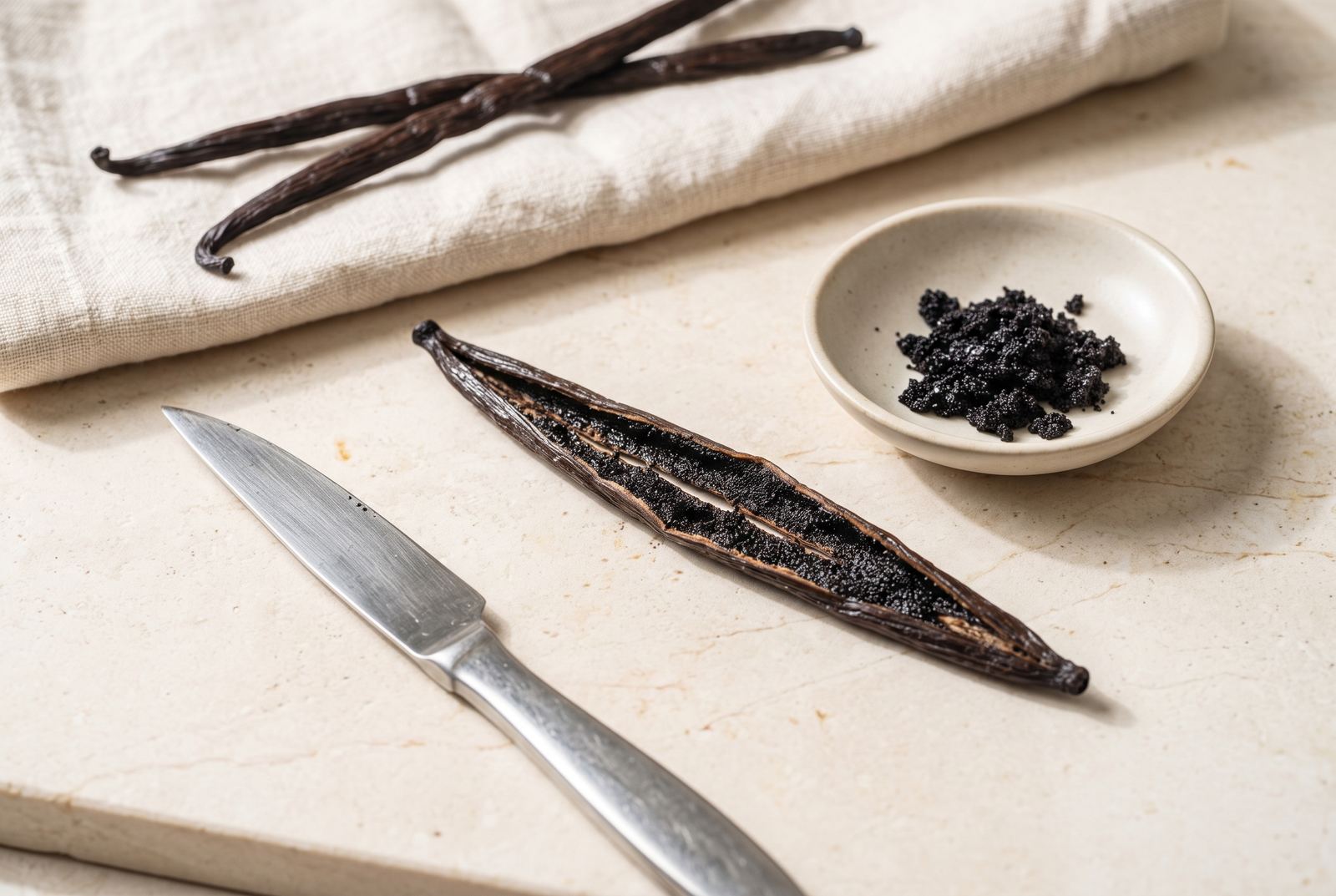
Lay the bean flat on a cutting board. Hold one end firmly and, with the tip of a small, sharp paring knife, cut along its length. You can cut all the way through into two halves, or stop just short of one end so the pod opens like a book. If your recipe asks for half a bean, cut it in half crosswise first and save the other piece, well wrapped, for later.
Step 2: Scrape the seeds
Open the pod and run the back of the knife (the blunt side) firmly from one end to the other. The seeds will gather on the blade as a dark, sticky paste, sometimes called vanilla caviar. Scrape both halves.
The seeds tend to clump. If your recipe includes sugar, rub the seeds into a spoonful of it with your fingertips or the flat of the knife. This spreads them evenly so you don't find one intense pocket of vanilla in your custard.
Step 3: Infuse the aroma
The seeds are only part of the story. The pod itself holds plenty of aroma, which is why many cooks add both seeds and the scraped pod to the pot.
For custards, ice-cream bases, pastry cream, panna cotta or rice pudding, add the seeds and pod to milk or cream and warm it gently. Take it off the heat just before it simmers, cover, and let it steep. A short rest gives a light note; a longer steep gives deeper flavour. Some specialists recommend gentle, low heat over a longer time rather than adding more vanilla. Remove the pod before continuing with your recipe.
In recipes without a warm liquid, such as cake batters or cookie doughs, simply add the scraped seeds and keep the pod for another use.
Step 4: Store unused beans well
Vanilla's enemies are air, heat and light. To keep beans supple and fragrant:
- Store them in an airtight glass jar or a well-sealed, double-wrapped bag with the air pressed out. Vacuum-sealed packs are ideal until opened.
- Keep them at room temperature in a cool, dark cupboard, away from the stove and sunlight.
- Avoid the refrigerator for whole beans. Many vanilla specialists advise against it because the cold, damp environment can encourage mould.
- Check them now and then. Even sealed beans slowly dry over time, so they are best enjoyed while still soft.
If a bean ever shows fuzzy spots or smells musty, it is safer not to use it.
Step 5: Give the pod a second life
A scraped pod is far from finished. Vanilla specialists suggest that, as long as a used pod is still fragrant and pliable, you can rinse it, let it dry, and use it again, often two or three times in total.
Vanilla sugar. This is the classic second use. Let the used pod dry completely, then bury it in a jar of granulated or caster sugar. Close the lid and give it a week or two; the sugar slowly takes on the pod's perfume. For a stronger result, some cooks grind the dried pod with a little sugar and sift out any coarse pieces. Use it in coffee, on morning toast, in whipped cream or anywhere a recipe calls for sugar.
Other ideas. Simmer a used pod in sugar and water for a simple vanilla syrup, then strain it out once cool. It is lovely in iced coffee, tea or cocktails.
A note on how much to use
Recipes and brands suggest different equivalents between beans, extract and paste, because pods vary in size and moisture. Rather than chasing an exact conversion, start with what the recipe asks for, taste, and adjust next time. With vanilla, more is not always better; a well-infused half pod can be more than enough for a litre of custard.
Ten pods, one for the dish you haven't made yet
Once you have split your first bean, you will find more reasons to reach for one. The Signature Reserve holds nine Grade A Indonesian Vanilla planifolia pods for the recipes you return to, and a tenth, with our compliments, for something new. Message us on WhatsApp whenever you are ready.