For the curious first-time buyer
Real Vanilla vs. Vanilla Flavouring: What's the Difference?
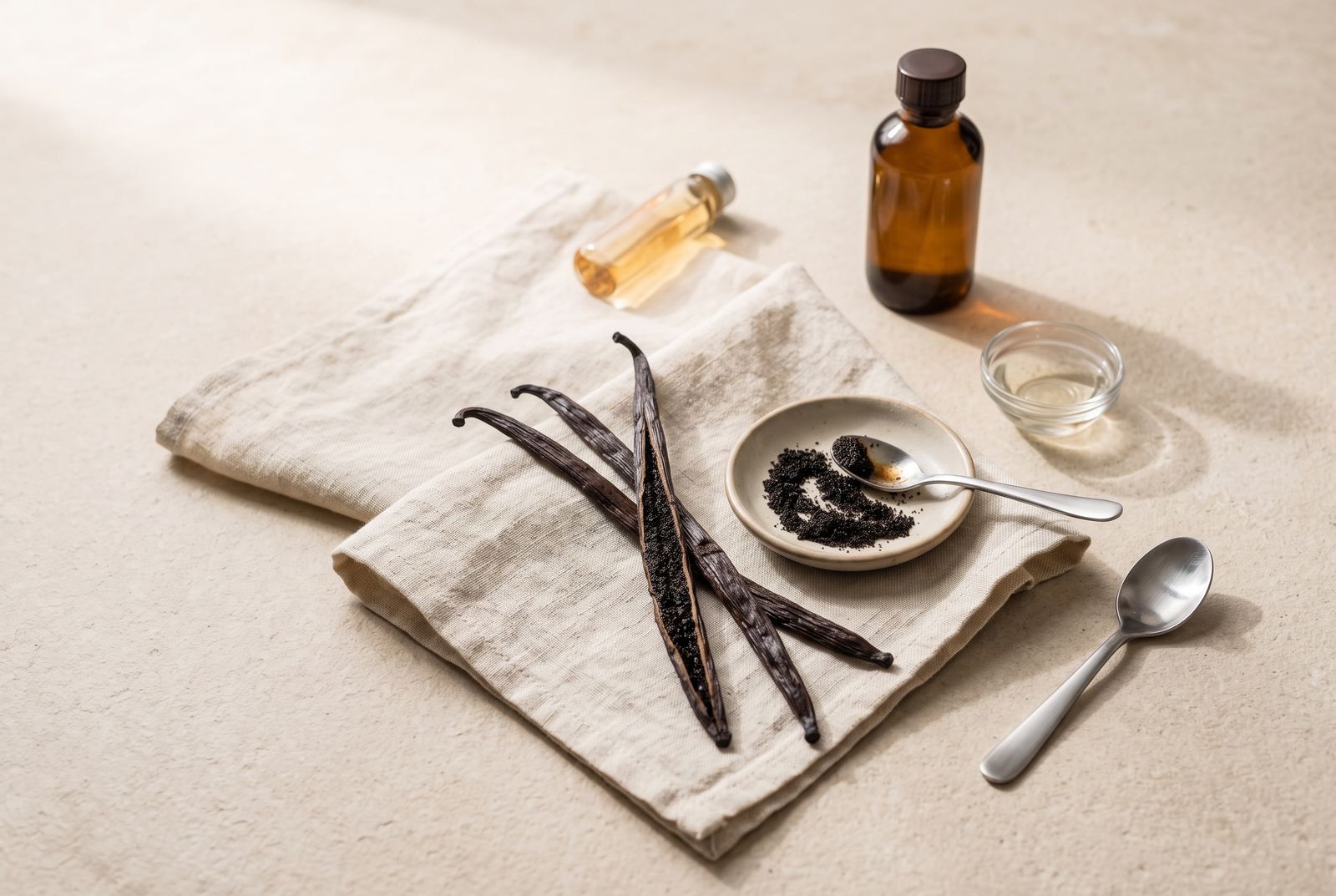
Stand in any baking aisle and you will find vanilla in half a dozen forms: dark pods in a tube, small bottles of extract, jars of speckled paste, and clear or brown "vanilla flavour" at a fraction of the price. They all promise the same comforting note. They are not the same thing, and each has a place. Here is a calm, honest guide to what sits behind each label.
Where vanilla begins
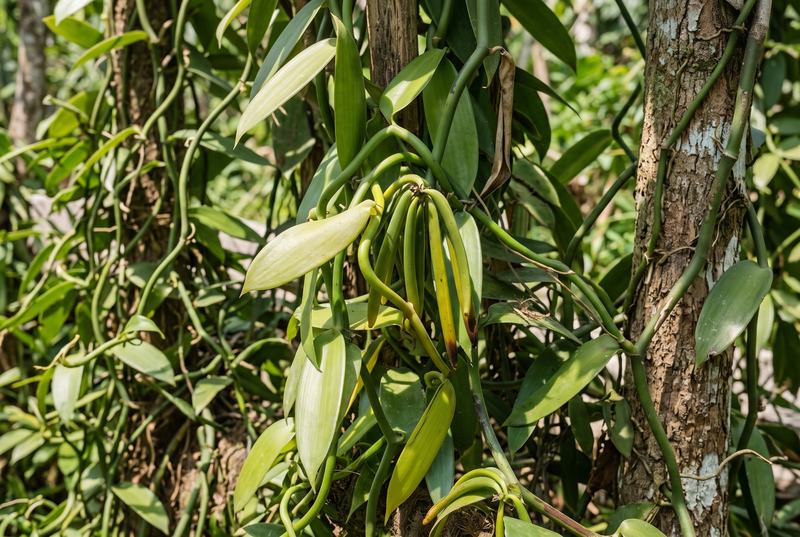
All true vanilla starts as the fruit of a climbing orchid. Most of the vanilla sold for cooking comes from Vanilla planifolia, one of only a few species grown commercially for flavour. The green pods have almost no aroma when picked. Their character develops slowly during curing, a weeks-long process of heating, sweating and drying that we explore in our article on Indonesian vanilla.
The best-known compound in cured vanilla is vanillin. It is far from the only one. Food researchers and test kitchens describe pure vanilla as carrying hundreds of aroma compounds, with one estimate placing the number of flavour volatiles at around 250. Those supporting notes are what people mean when they describe vanilla as woody, creamy, floral or slightly smoky.
Whole vanilla beans
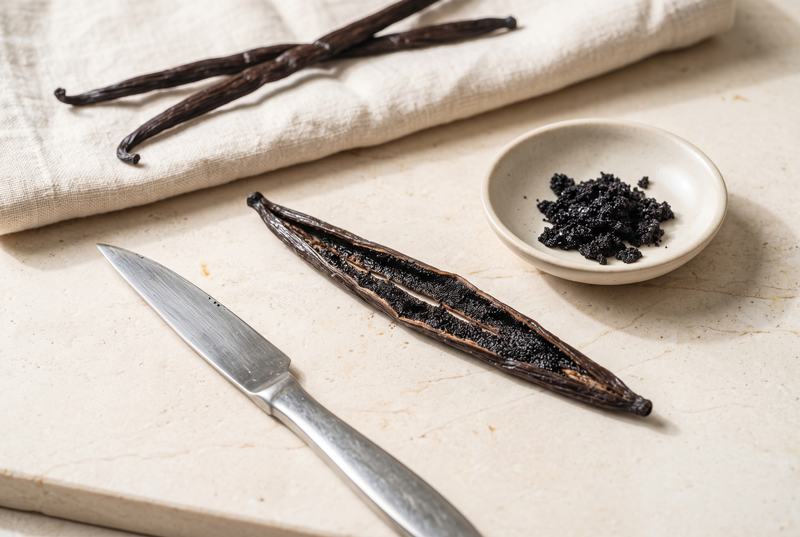
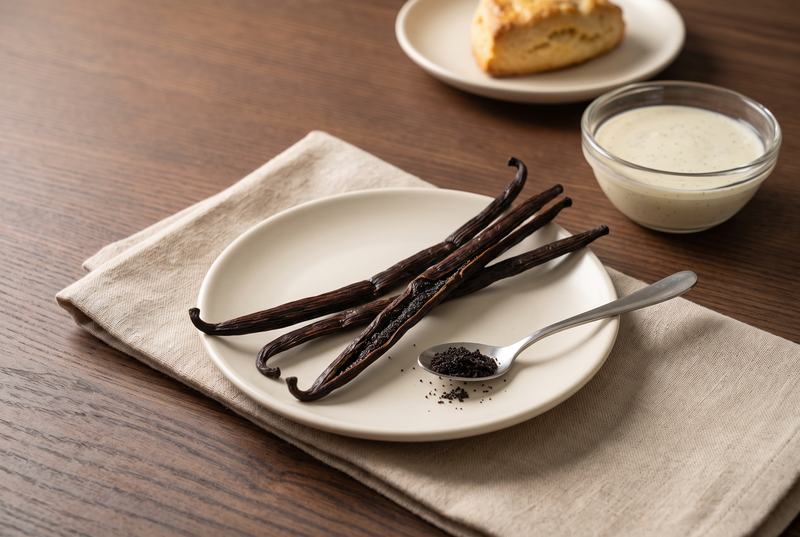
A whole bean is vanilla in its most complete form: the cured pod, with thousands of tiny seeds held in an aromatic, oily pulp inside. You split it, scrape out the seeds, and often steep the empty pod in warm milk, cream or syrup to draw out more flavour.
Best for: recipes where vanilla is the star and is not exposed to long, high heat — custards, crème brûlée, panna cotta, ice cream, pastry cream, poached fruit and syrups.
Keep in mind: beans ask for a little more effort, and they cost more per use than extract.
Pure vanilla extract
Extract is made by steeping chopped vanilla beans in a mixture of alcohol and water, which pulls the aroma compounds out of the pod. Definitions vary by country. In the United States, for example, a product labelled "vanilla extract" must contain at least 35% alcohol by volume and be made with a set minimum quantity of vanilla beans per gallon. A similar product with less alcohol is called "vanilla flavoring" there, even though it is still made from beans.
Best for: everyday baking, batters, doughs and frostings, where you want real vanilla with easy, consistent measuring.
Keep in mind: some tasters notice a slight alcoholic edge when extract is added to uncooked dishes.
Vanilla bean paste
Paste is usually a blend of vanilla extract, ground beans or seeds, sugar or syrup, and a natural thickener. It gives you the visible specks of a scraped pod with the convenience of a spoon. Many brands suggest swapping it one-for-one with extract.
Best for: frostings, whipped cream, cheesecake and light-coloured desserts where you want both flavour and specks.
Keep in mind: specks show that bean material is present. On their own, they do not tell you how good the vanilla is.
Vanilla flavouring and vanillin
The word "flavouring" covers a wide range of products, so it is worth reading the label rather than assuming. Many vanilla-style flavourings are built mainly around vanillin. That vanillin can come from different routes: chemical synthesis from guaiacol, production from lignin (a component of wood), or biotechnological processes that convert natural plant materials such as ferulic acid. Depending on the route and local rules, it may be labelled natural, nature-identical or artificial.
In Indonesia, BPOM groups flavourings into perisa alami (natural), perisa identik alami (nature-identical) and perisa artifisial (artificial). Other countries use their own categories, so the same product can carry different words abroad.
Vanillin-based flavourings exist because demand for vanilla flavour is enormous and bean supply is limited. America's Test Kitchen notes that only about 1% of the world's vanilla flavouring comes from real vanilla.
Best for: baked goods with long oven time, large-batch production, and recipes where a clear, strong vanilla note at low cost matters most.
Keep in mind: in uncooked or gently heated dishes, such as puddings, the same kitchens found tasters more often noticed the fuller, more layered flavour of real vanilla.
So which one should you use?
There is no single right answer. A useful rule of thumb:
- Vanilla is the main flavour and stays cool or gently warmed: a whole bean, or paste.
- Vanilla supports other flavours in a baked recipe: extract, or a good flavouring if budget matters.
- You want specks: a bean or paste.
- You are scaling up or baking at high heat: extract or flavouring are practical choices.
The best kitchens keep more than one form on the shelf and choose based on the dish.
A gentle place to start
If you have never worked with a whole pod, start small. The Tasting Trio holds three Grade A Indonesian Vanilla planifolia pods — enough for a custard, a batch of vanilla sugar, and one recipe you have been meaning to try. Write to us on WhatsApp and we will help you choose.