Indonesian vanilla has long been known abroad, once traded simply as "Java vanilla". At home, it is still something of a quiet secret. This is the story of how a single orchid flower becomes the dark, fragrant pod in your kitchen, and what makes vanilla from these islands worth knowing.
An orchid that needs a helping hand
Vanilla is the fruit of a climbing orchid. Of the roughly 140 known Vanilla species, only a handful are grown commercially, and Vanilla planifolia is the most important of them.
Its flowers open in small clusters, a few at a time, and each one is receptive for only about six to seven hours. In nature, effective pollinators are scarce, and research cited by the University of Florida puts natural pollination of V. planifolia at around 1%, even in its native range.
That is why almost all of the world's vanilla is pollinated by hand. The technique still used today was discovered in 1841 on the island of Réunion by Edmond Albius, a 12-year-old enslaved boy. With a slender stick and a small movement of the thumb, he lifted the thin flap of tissue that separates the flower's male and female parts and pressed them together. The European Commission notes that nearly all vanilla is still pollinated with his method.
Picture a grower walking the rows each morning during flowering season, checking for the blooms that opened that day. A flower missed is a pod that will never grow.
Eight or nine months of patience
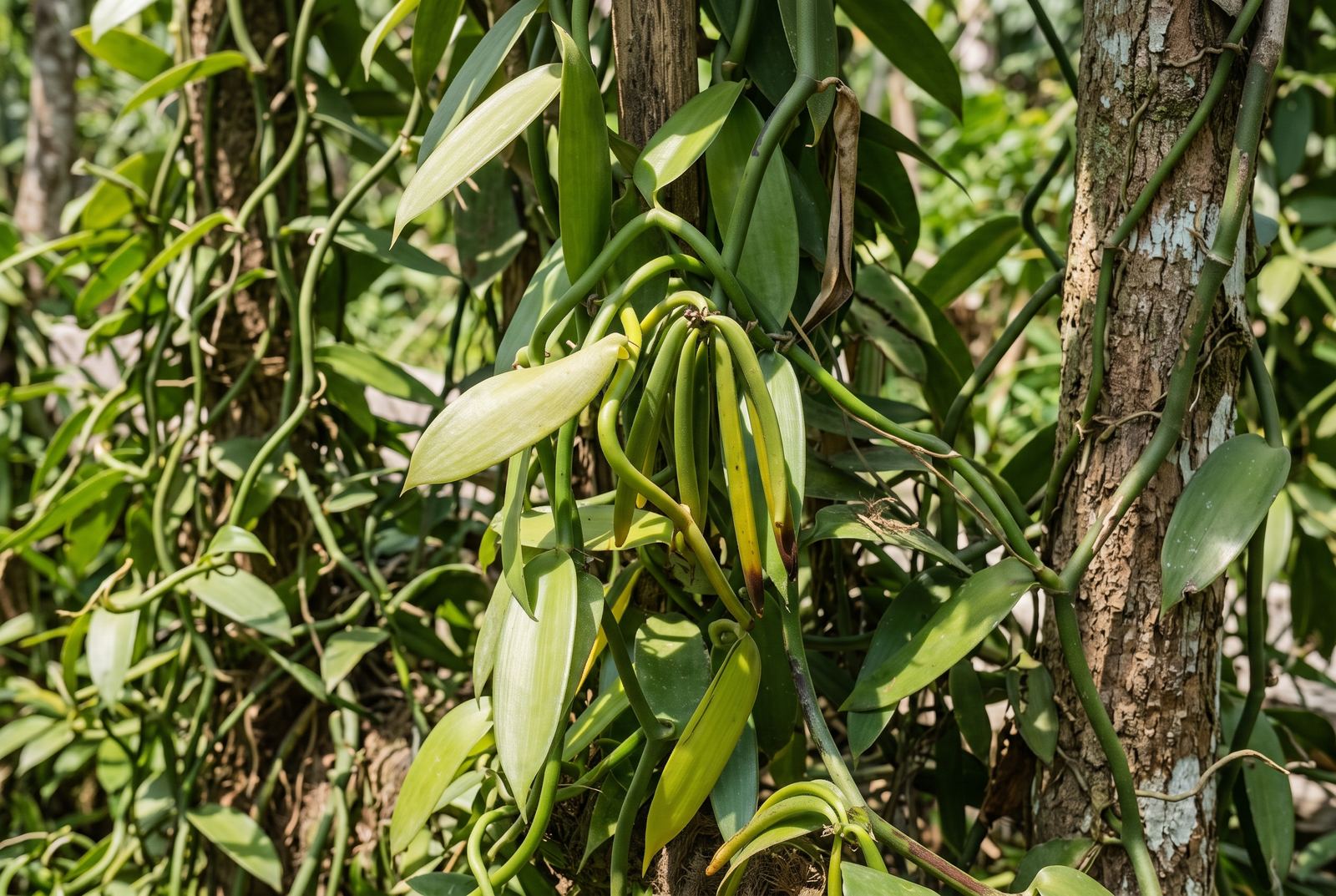
Once pollinated, the flower's base slowly swells into a long green pod. According to University of Florida extension specialists, pods reach their best harvest stage around eight to nine months after pollination. Pods picked too early carry less of the natural precursor that later becomes vanillin. Pods left too long can split on the vine.
At harvest, a green vanilla pod smells of almost nothing. Its famous aroma has not yet been created.
Curing: where the aroma is made
Curing turns a green, scentless pod into vanilla. The green pod stores a compound called glucovanillin. During curing, the pod's own enzymes gradually release vanillin and many other aroma compounds. Methods differ from place to place, but most follow four broad stages:
- Killing. The pods are briefly scalded in hot water or heated. This stops the pod from continuing to grow and sets the enzyme process in motion.
- Sweating. The warm pods are wrapped and kept in a warm, humid space. They turn from green to brown, and the aroma begins to develop.
- Drying. The pods are dried slowly, often in the sun in Indonesia, over weeks or longer. They lose most of their moisture; one university guide notes a cured pod may weigh about a quarter of its fresh weight.
- Conditioning. The pods rest in closed boxes or wrapped in paper for weeks to months, letting the aroma round out and settle.
The full process commonly takes several months. Every decision along the way, from harvest timing to drying conditions, shapes the final flavour. Indonesian researchers at IPB University and the National Research and Innovation Agency (BRIN) have found that harvest maturity and curing practice are among the biggest reasons quality varies from one producer to the next.
Vanilla in Indonesia
According to Indonesia's Ministry of Agriculture, as cited by the Indonesian Trade Promotion Center in Hamburg, vanilla was first introduced to the country in 1819 as part of the collection at the Bogor Botanical Gardens. Plantations later flourished on Java, which is why Indonesian beans became known internationally as "Java vanilla". Cultivation then spread across the archipelago, including Sumatra, Sulawesi, Bali, Nusa Tenggara and Papua.
Today Indonesia is widely reported as one of the world's largest vanilla producers, often cited as second only to Madagascar. A 2024 study by Indonesian government researchers also placed Indonesia among the world's top four vanilla exporters in 2022.
What does Indonesian vanilla taste like?
There is no single Indonesian vanilla. Island, soil, harvest and curing all leave their mark. Trade descriptions often speak of a sweet, creamy profile with smoky notes and hints of chocolate, caramel or woody. Some sources also note that Indonesian beans tend to be slightly firmer than beans from some other origins, with a strong, rich seed paste inside.
At Vanderlyn, we partner directly with farmers in Java, Sulawesi, Nusa Tenggara Timur and Papua. Working at the source means we can offer Vanilla planifolia across the full range of grades. Our focus, and what we most want to share with the world, is gourmet-quality Indonesian vanilla. In our own tasting, our gourmet-quality beans are rich and full-bodied, with touches of chocolate, spice and cream. Because each region is a little different, we enjoy letting you taste the differences for yourself.
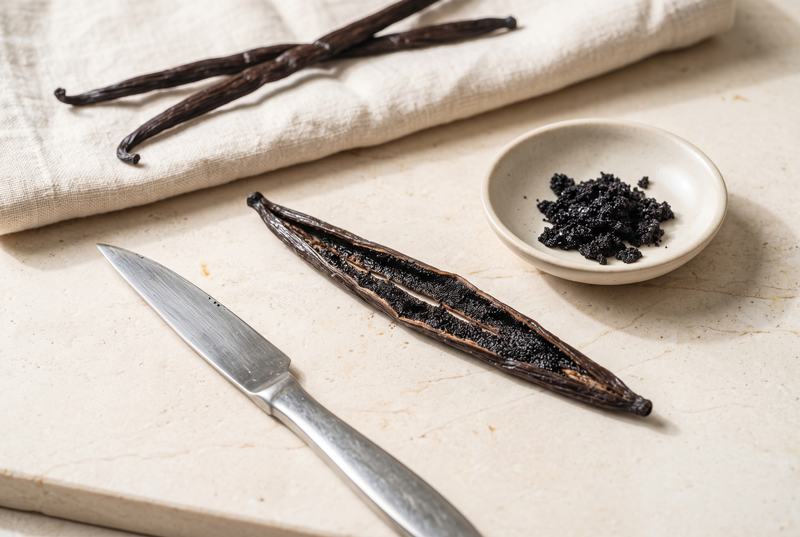
How vanilla looks tells only part of its story. A glossy pod or plenty of visible seeds is pleasant to see, but aroma, careful curing and proper storage matter just as much.
Bring it home
For kitchens that reach for vanilla every day, The Craft Selection offers Indonesian Grade A pods in a size made for regular baking. Pastry teams and hotel kitchens can step up to The House Supply or The Brigade Supply. And if you would rather begin with a first taste, The Tasting Trio is a gentle introduction. Send us a message on WhatsApp, and we will gladly tell you more about where your vanilla was grown.